
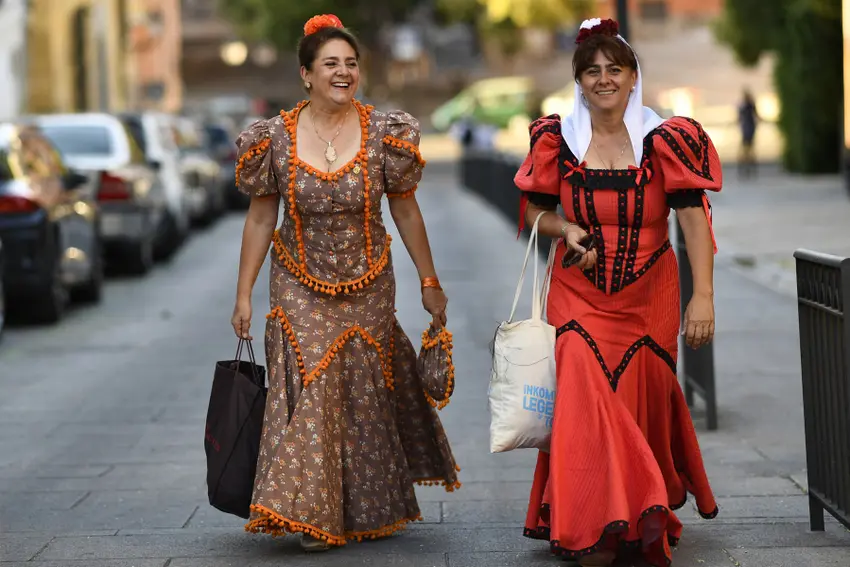
August 15th is an important date in the Spanish calendar not only because it's a public holiday but also as it's the day Catholics celebrate the Assumption of the Virgin.
Even though the Bible doesn't specifically mention this, for Católicos it commemorates the day the Virgin Mary entered heaven, and it’s traditionally honoured with church masses across the country.
Pretty much every city and town in Spain pays tribute to its patron Virgin: Madrid celebrates Virgen de la Paloma Day, Seville has la Virgen de los Reyes and the Canary Islands venerate la Virgen de la Candelaria.
Local celebrations may involve outdoor festivals, processions, bull runs, pilgrimages and other long-standing traditions.
In fact, August 15th is considered to be the day with the most local festivals (fiestas patronales) in Spain, with 1,196 municipalities holding their own celebrations.
Every year, August 15th is a ‘guaranteed’ vacation day, unless it falls on Sunday. In that case, each region can decide if they want to keep the holiday or change it to another day, such as moving it to the next work day.
But what about in 2026? This year August 15th is on a Saturday.
Unfortunately, the fact that it falls on a Saturday doesn’t mean that workers will necessarily get a day off on either the preceding Friday or following Monday to make up for it, except for some municipalities where they may have decided otherwise.
Don’t worry though, as by law everyone in Spain gets 14 days a year of public holidays, divided between national (usually 8 to 9), regional (3 to 4) and local (2).
That means that although you may not get to enjoy the August 15th public holiday this year, your autonomous community should make up for it with another day off.
In fact, a ruling by a Spain's National High Court court only last May means workers in the country will no longer miss out on 'festivos' that fall on Saturdays.
Comments